
AI-Powered Dashcam Telematics Solutions
Go beyond location tracking. TrackoBit's AI fleet dash cams and vehicle telematics help you verify incidents faster, investigate disputes with evidence, and build driver accountability across your fleet.
- Identify risky driving behaviour before it becomes an incident.
- Verify incidents faster with video-backed telematics evidence.
- Reduce false accident and insurance claims.
- Improve fleet-wide safety performance and accountability.
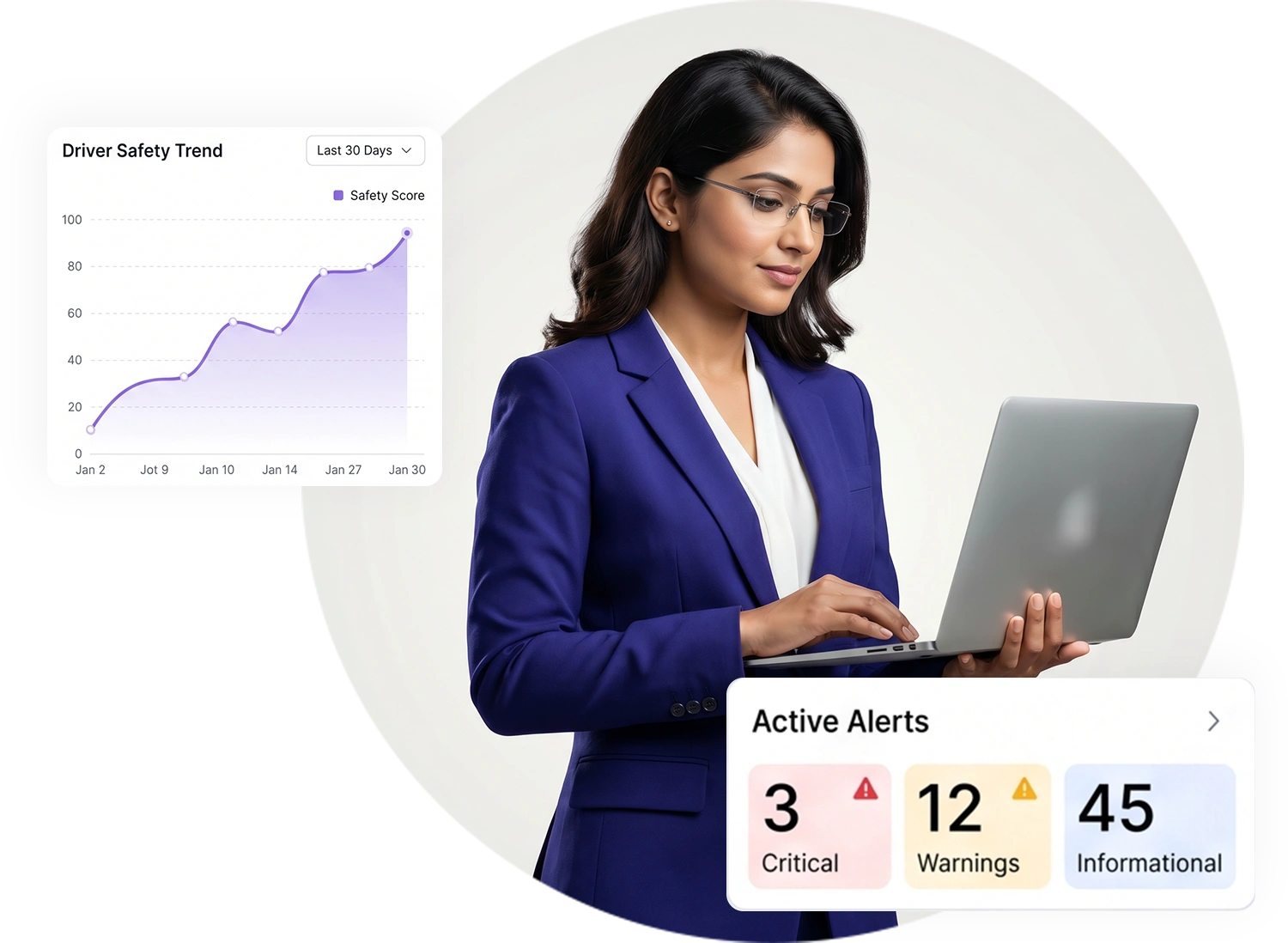
Powering 500,000+ Vehicles
Helping fleet operators move from tracking to true visibility.










What are Fleet Dash Cams for Telematics?
Dash Cam ExplainedFleet dash cams for telematics combine video footage with GPS and driving data to show what happened before, during, and after a driving event. Instead of relying on a single road-facing view, they pair multiple camera angles with trip data - helping fleet teams verify incidents, coach drivers, and reduce disputes with evidence rather than assumption.
Why Do Fleet Vehicles Need AI Dash Cams and Vehicle Telematics?
Driver statements and incomplete GPS logs aren't enough to manage risk. AI dash cams, combined with ADAS, help fleets catch risk early and prove what happened when it matters.
- Verify driver claims with evidence
- Catch risky driving before incidents occur
- Resolve disputes with proof, not paperwork
- Unify video, GPS, and telematics data
- Validate accidents with synced video data
Why this matters to your fleet owner:Every unresolved dispute or missed risk signal is a direct cost - in insurance premiums, downtime, or reputation. AI dash cams and ADAS remove that uncertainty.
Explore Telematics Benefits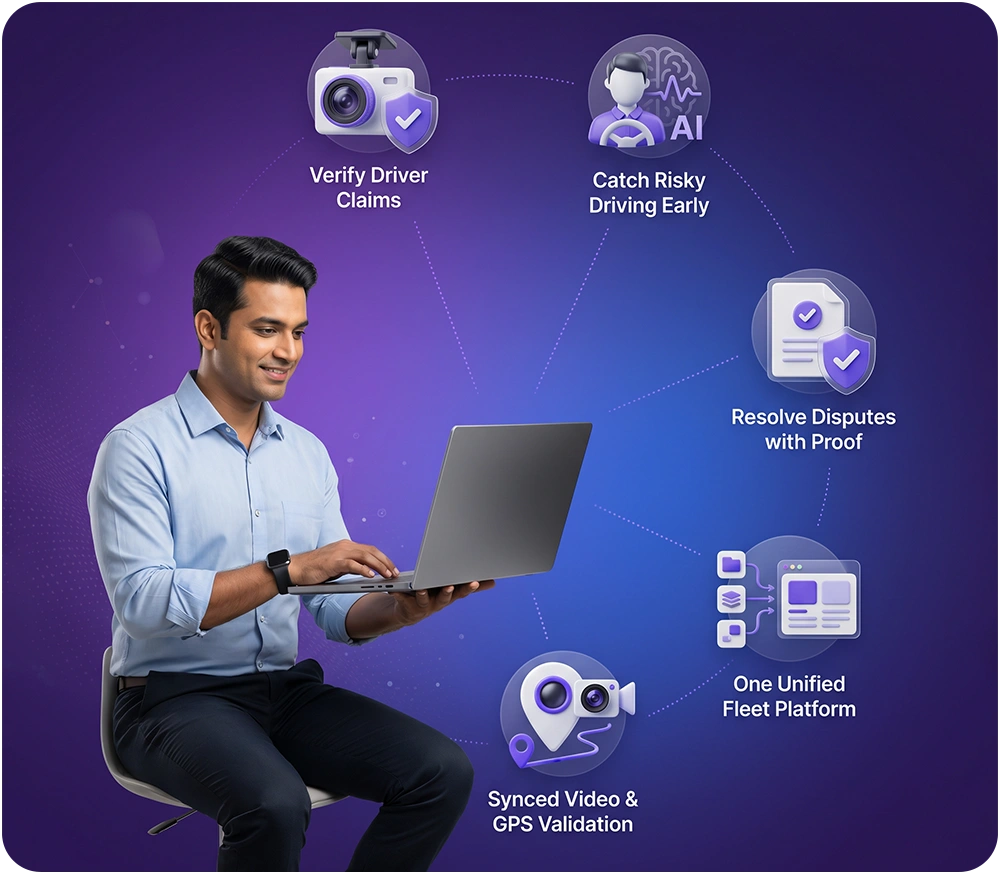
Know What Happened, Not Just Where It Happened
TrackoBit combines AI dash cams and vehicle telematics to help you verify incidents with video-backed evidence.
Advanced Fleet Dash Cam Solutions for Telematics
Dash cam telematics helps fleet teams move beyond vehicle tracking by connecting video evidence, GPS data, and driving intelligence in one platform.
Reduce Risky Driving
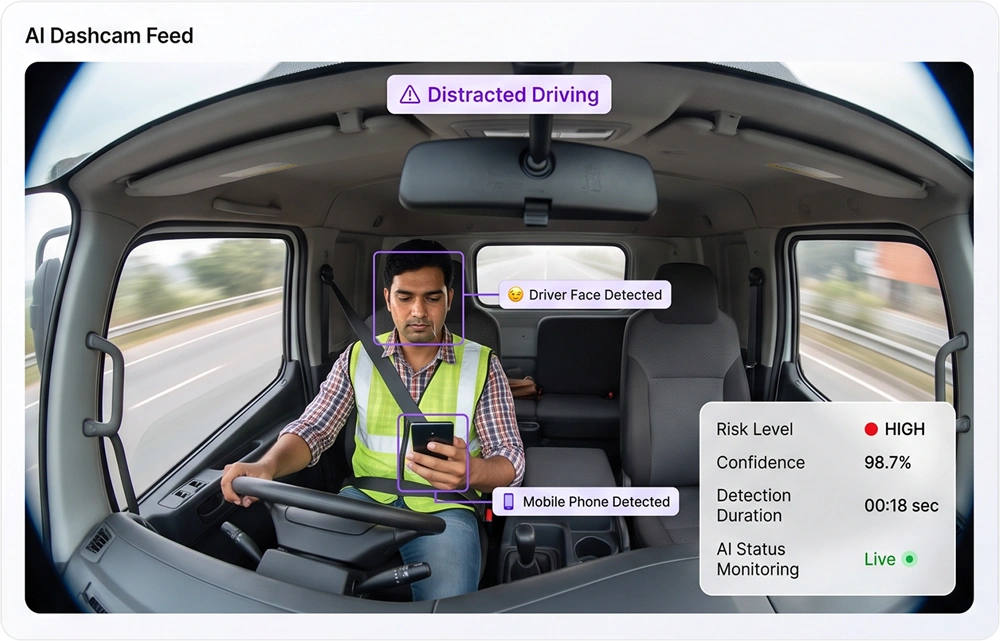
Unsafe driving often goes unnoticed until it results in an accident, complaint, or compliance issue. AI dash cams catch risk early, before it becomes an operational problem.
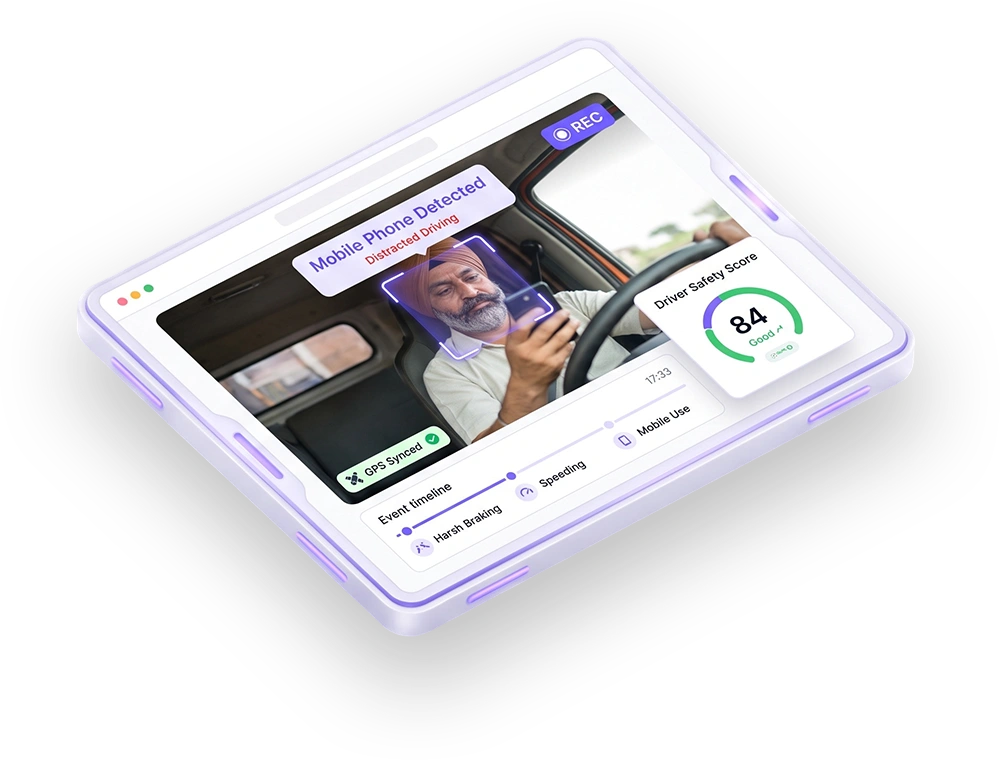
- Detect distracted driving and mobile phone usage
- Flag lane switching and aggressive cornering
- Monitor fatigue-related driving patterns
- Enable video-backed coaching for drivers
Video-Based Incident Verification
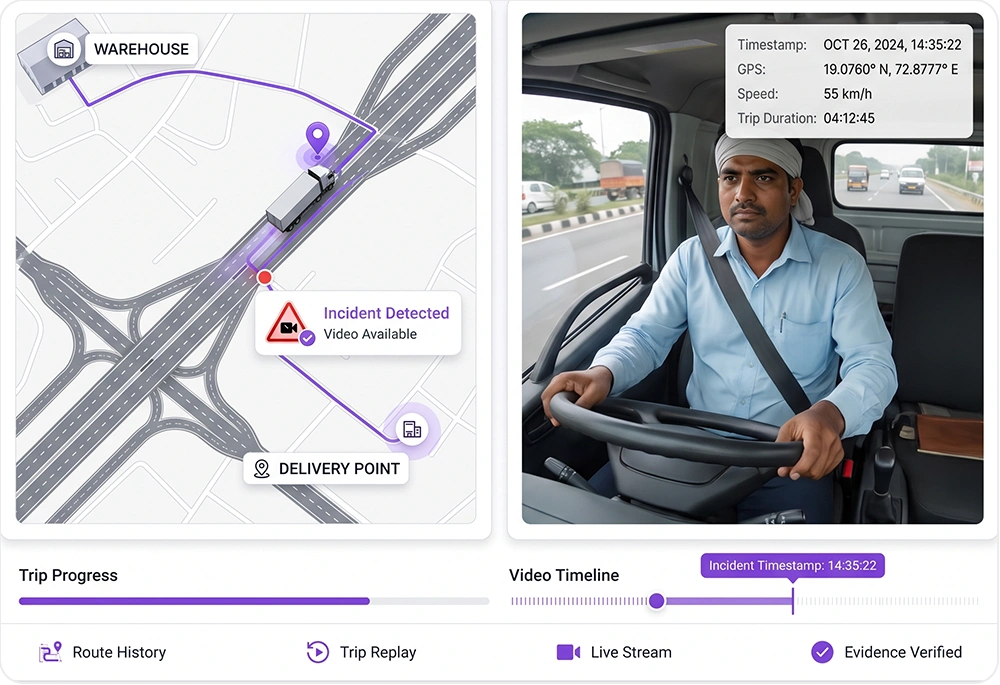
GPS shows where an incident happened. Dash cam telematics shows what actually happened - including in real time.
- Verify route deviations with visual evidence
- Access trip-linked video footage and route history
- Review driving events with location and time stamps
- Live stream footage before, during, or after an incident
Faster Incident Verification
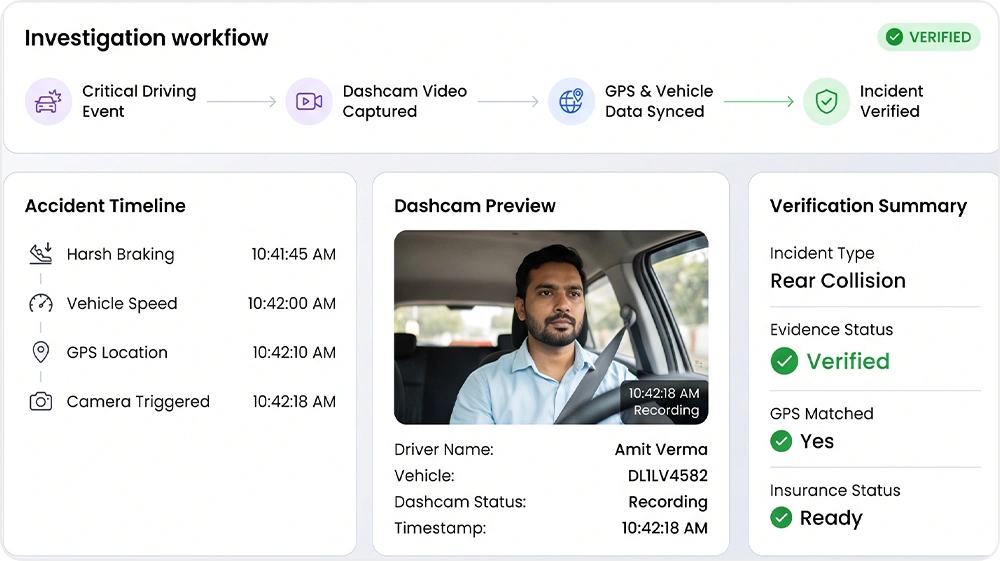
Accident investigations slow down when teams rely on driver statements and fragmented reports. Dash cam telematics gives instant access to video-backed evidence.
- Capture footage during critical events
- Verify timelines with synced telematics data
- Reduce false insurance and liability claims
- Speed up incident investigations fleet-wide
Driver Behavior Analytics
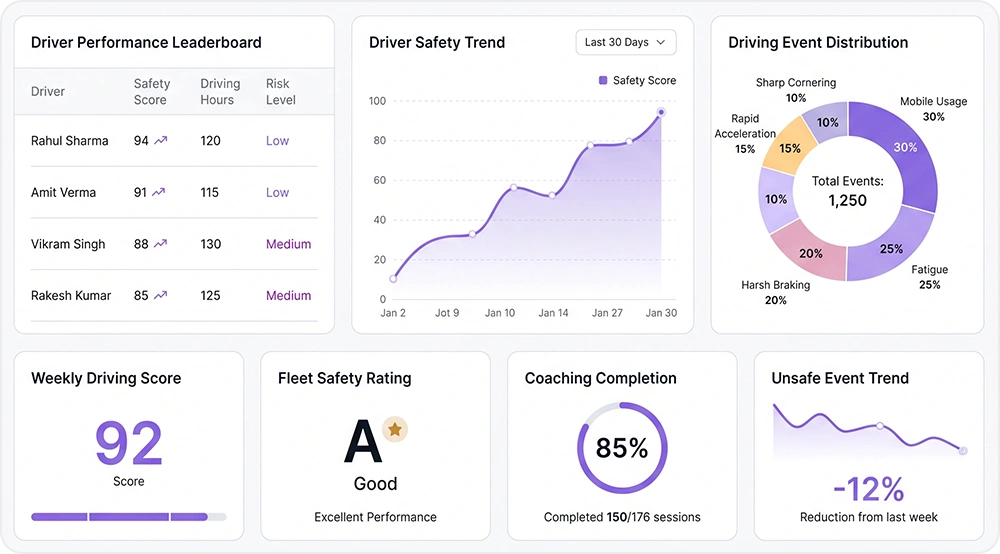
Collecting footage is not enough. Fleet management dash cams analytics help businesses identify recurring risks and improve safety performance.
- Track recurring unsafe driving trends
- Access analytics through the fleet web portal
- Compare driver performance across operations
- Prioritise coaching using driving event data
Centralized Fleet Safety
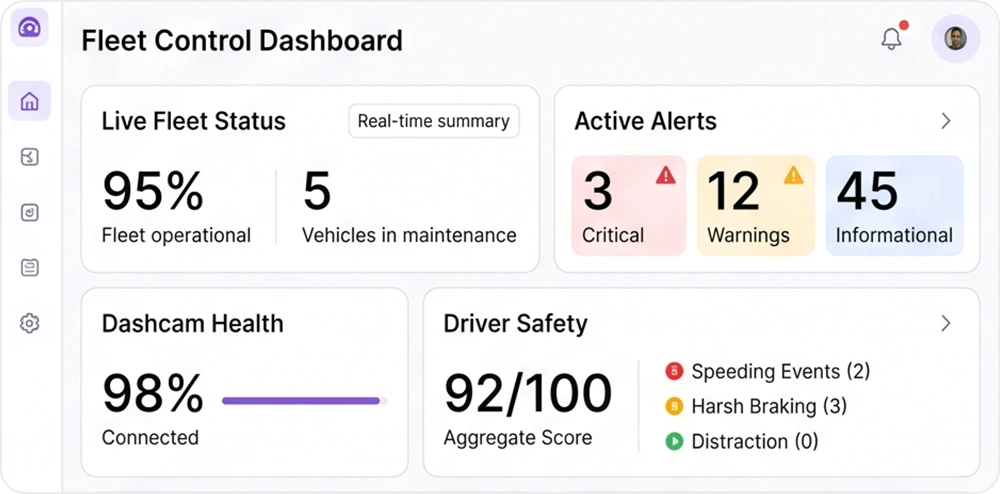
Managing safety becomes difficult when video, GPS, and telematics live in separate systems. TrackoBit centralises all three.
- Access video, route history, and alerts from one platform
- Eliminate manual switching between systems
- Access video, route history, and alerts from one platform
- Improve coordination between operations and safety teams
Cam Channels We Support
TrackoBit's dash cam system isn't limited to a single camera view. Fleets get visibility from multiple angles, configurable to operational needs.
-
Driver-facing Camera (DMS)
Monitors driver alertness, distraction, and fatigue inside the cabin
-
Road-facing Camera (ADAS)
Captures the forward view for collision, lane, and following-distance detection.
-
Reverse Camera
Deployed as a reverse or cargo-facing view, depending on vehicle type and fleet use case
- Default Configuration 2 channels
Every fleet vehicle comes with this by default.
- Multi-channel scalability Up to 8 channels
For fleets that need broader coverage — cargo monitoring, blind-spot visibility, or multi-angle incident verification.
ADAS + DMS: Built to Work Together
AI dash cams are only as useful as the systems behind them. TrackoBit's dash cam telematics is built on two interlinked layers:
-

ADAS (Advanced Driver Assistance Systems)
Detects external risk: collision warnings, lane departure, tailgating, and speeding relative to road conditions.
-

DMS (Driver Monitoring System)
Detects internal risk: drowsiness, distraction, phone usage, and driver inattentiveness.
Together, ADAS and DMS give fleet teams a complete risk picture - what's happening on the road, and what's happening inside the cabin - rather than treating external hazards and driver behaviour as separate problems.
Data Hosting & Security
Fleet video data shouldn't pass through unknown third parties. TrackoBit runs on self-hosted, AWS-hosted infrastructure - not aggregator platforms, so your data isn't routed through an intermediary vendor.
For fleets on JT-808 and JT-1078, device data stays within defined geographic boundaries, meeting regional data-residency requirements.
Protocols We Support
TrackoBit isn't locked to one device protocol:
- JT-808
Device data and command protocol, with regional data-residency compliance
- JT-1078
Video transmission protocol, supporting live streaming and footage retrieval
Hardware Comparison
How TrackoBit compares with typical market hardware:
| Capability | Typical Market Hardware | TrackoBit |
|---|---|---|
| Camera channels | Often single channel, fixed | Multi-channel supported |
| ADAS + DMS | Frequently sold as separate add-ons | Natively interlinked |
| Data hosting | Often routed via third-party aggregators | Self-hosted, AWS-hosted infrastructure |
| Protocol support | Often locked to one vendor protocol | Multi-protocol support, including JT-808 and JT-1078 (widely used) |
| Data residency | Rarely guaranteed | JT-808/JT-1078 data stays within defined boundaries |
| Driver communication | Mostly one-way (recording only) | Two-way communication built in |
| Live streaming | Often limited or absent | Available before, during, and after incidents |
Must-have Dash Cam Telematics Features for Fleet Management
Fleet management dash cams should improve operational visibility, driving event monitoring, and incident intelligence through connected telematics capabilities.
Fleet Dash Cam with GPS Tracking
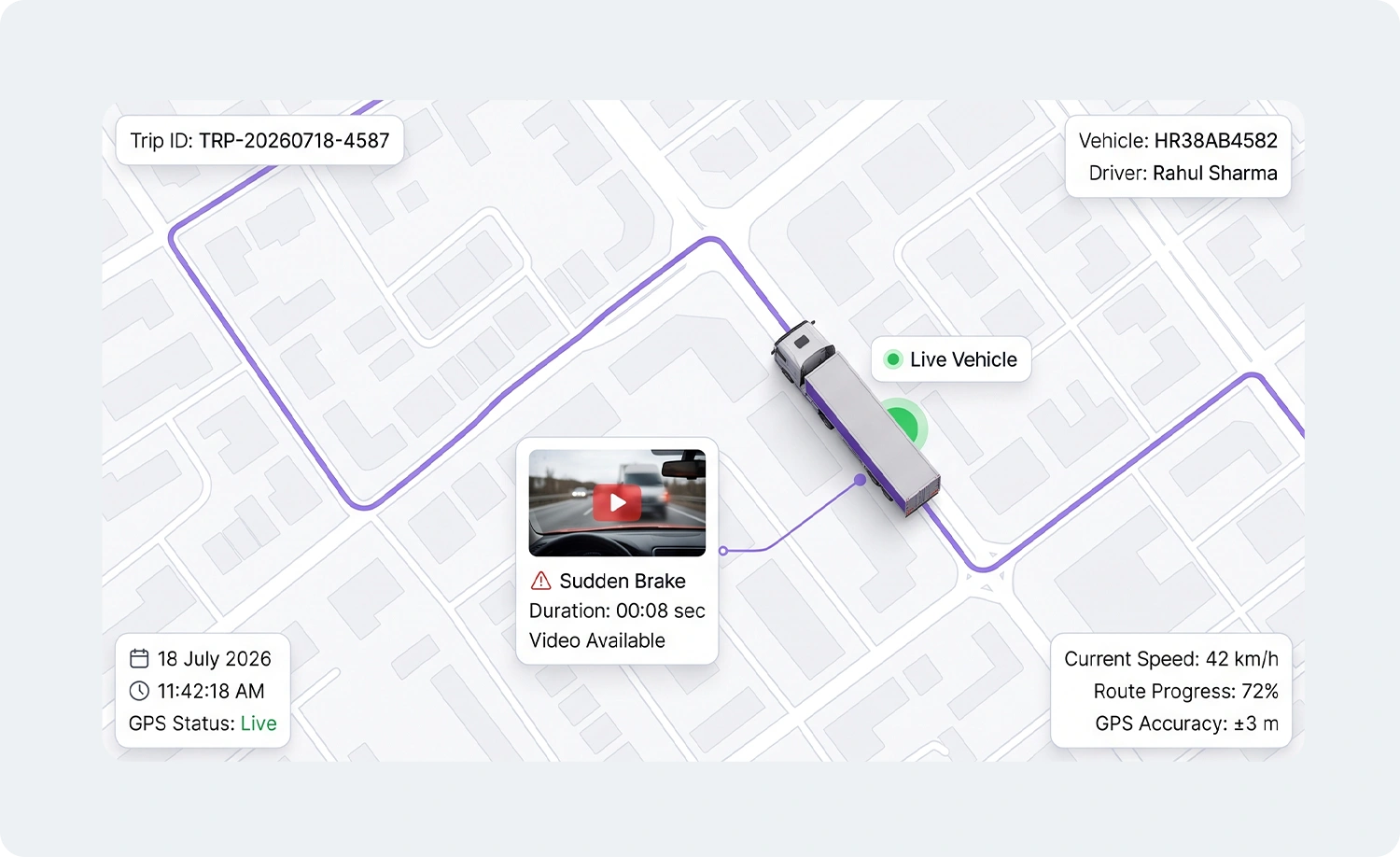
Video footage connected to route history and trip activity, so disputes resolve on evidence, not opinion.
AI Driving Event Detection
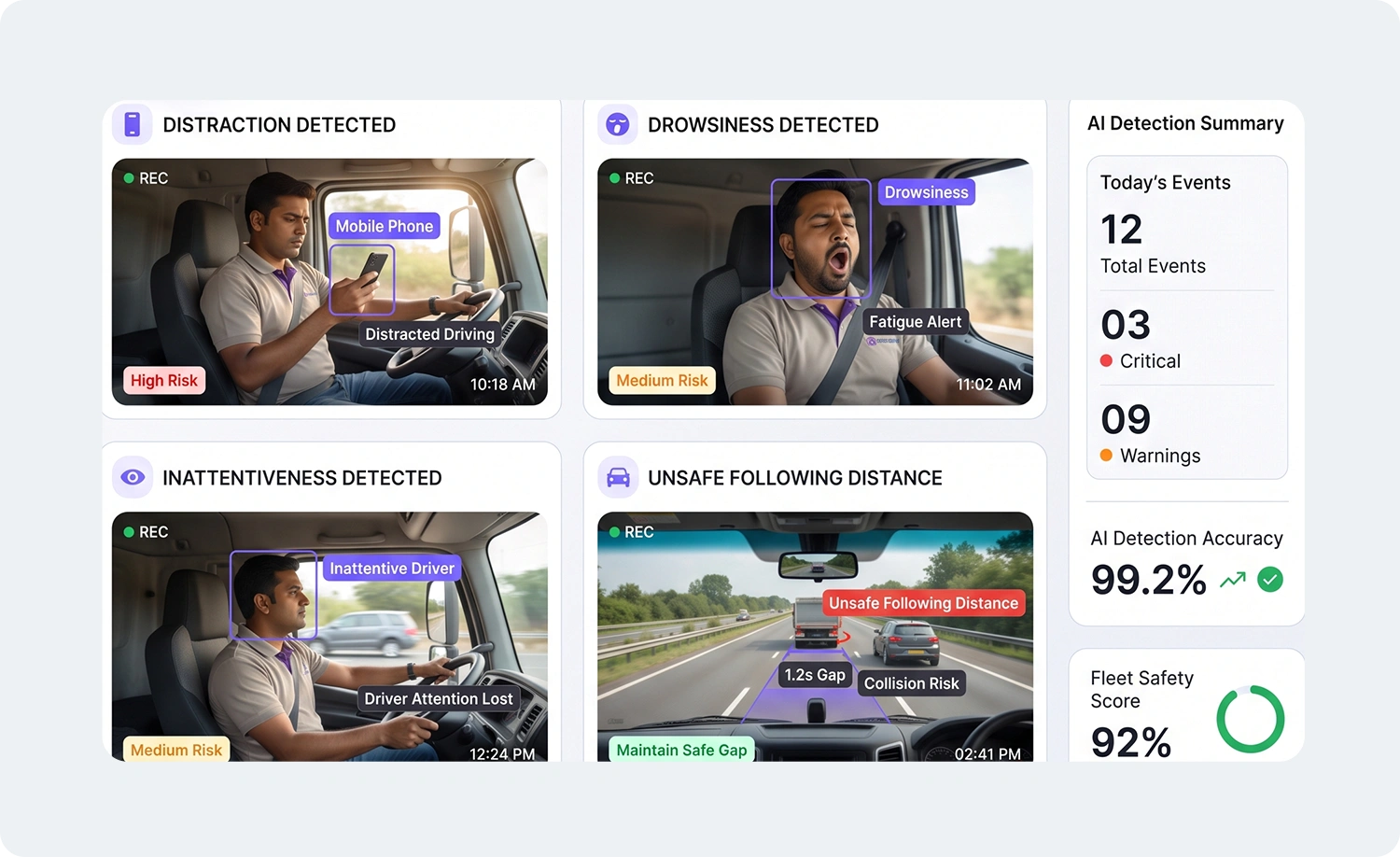
Distraction, drowsiness, inattentiveness, and unsafe following distance, flagged before they become incidents.
Dash Cam Fleet Portal Visibility
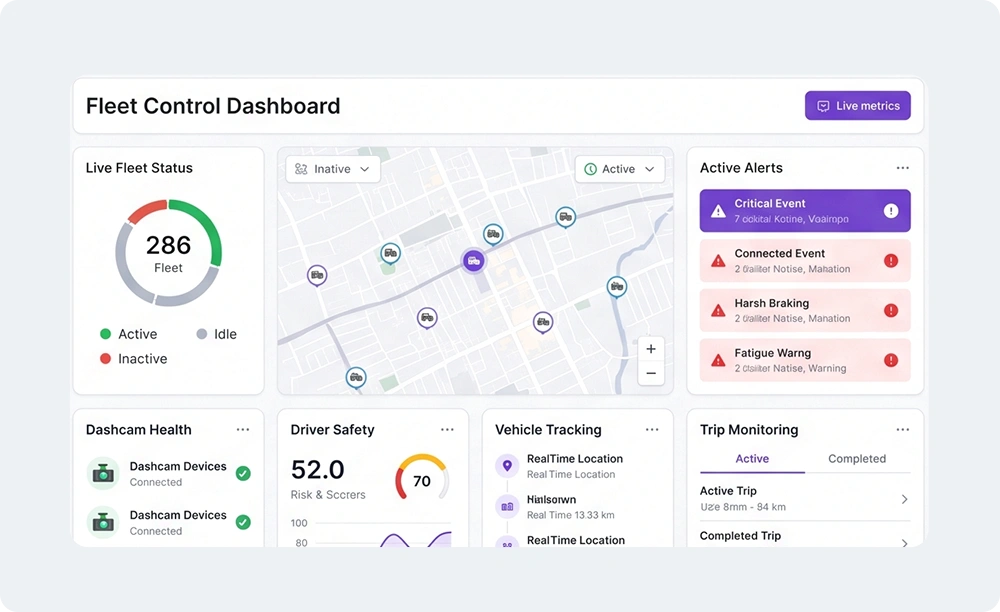
Trip-linked footage and driving events in one platform, cutting investigation time.
Real-Time Fleet Alerts and Notifications
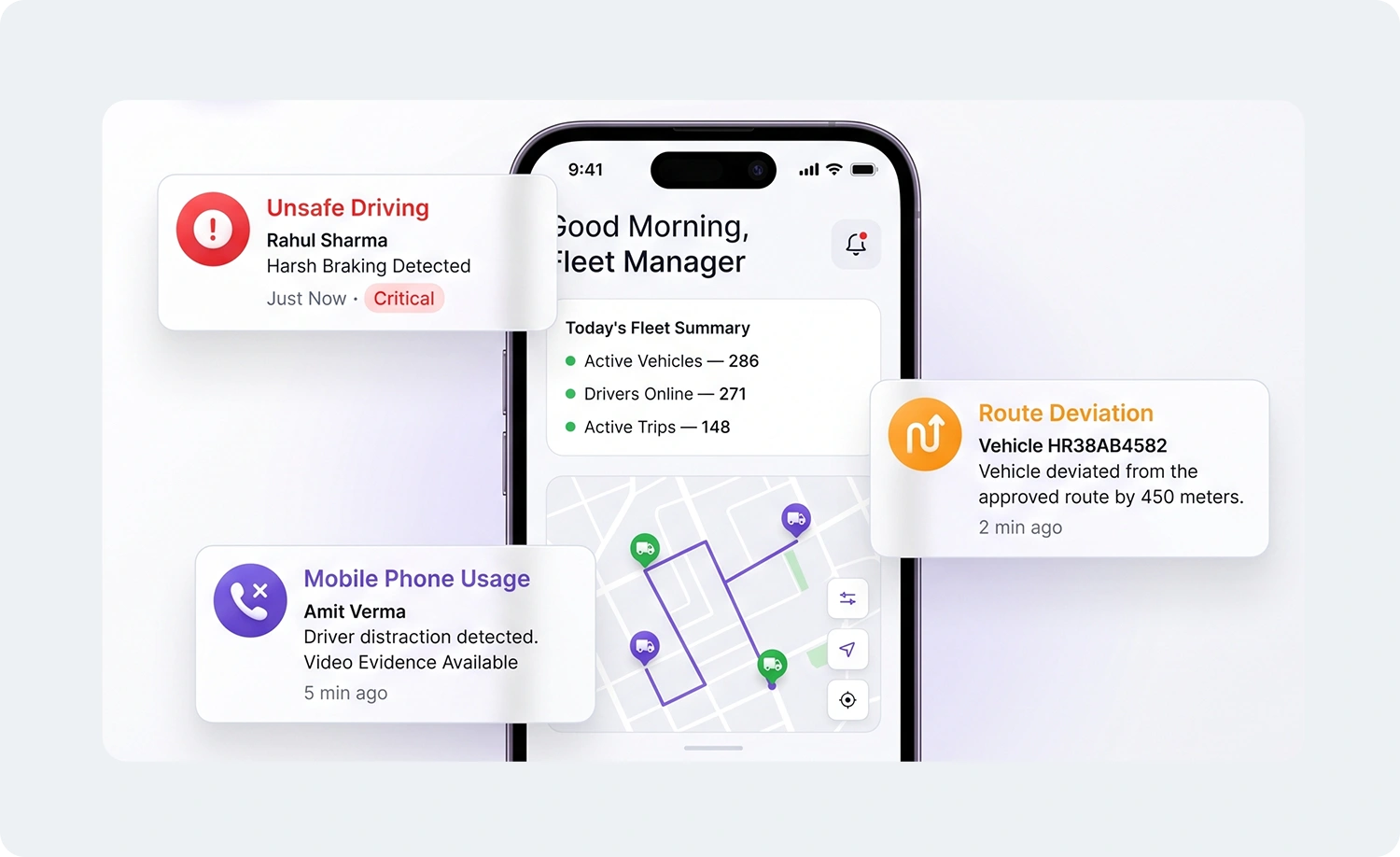
Instant notifications for unsafe driving events and route deviations.
Historical Trip Playback
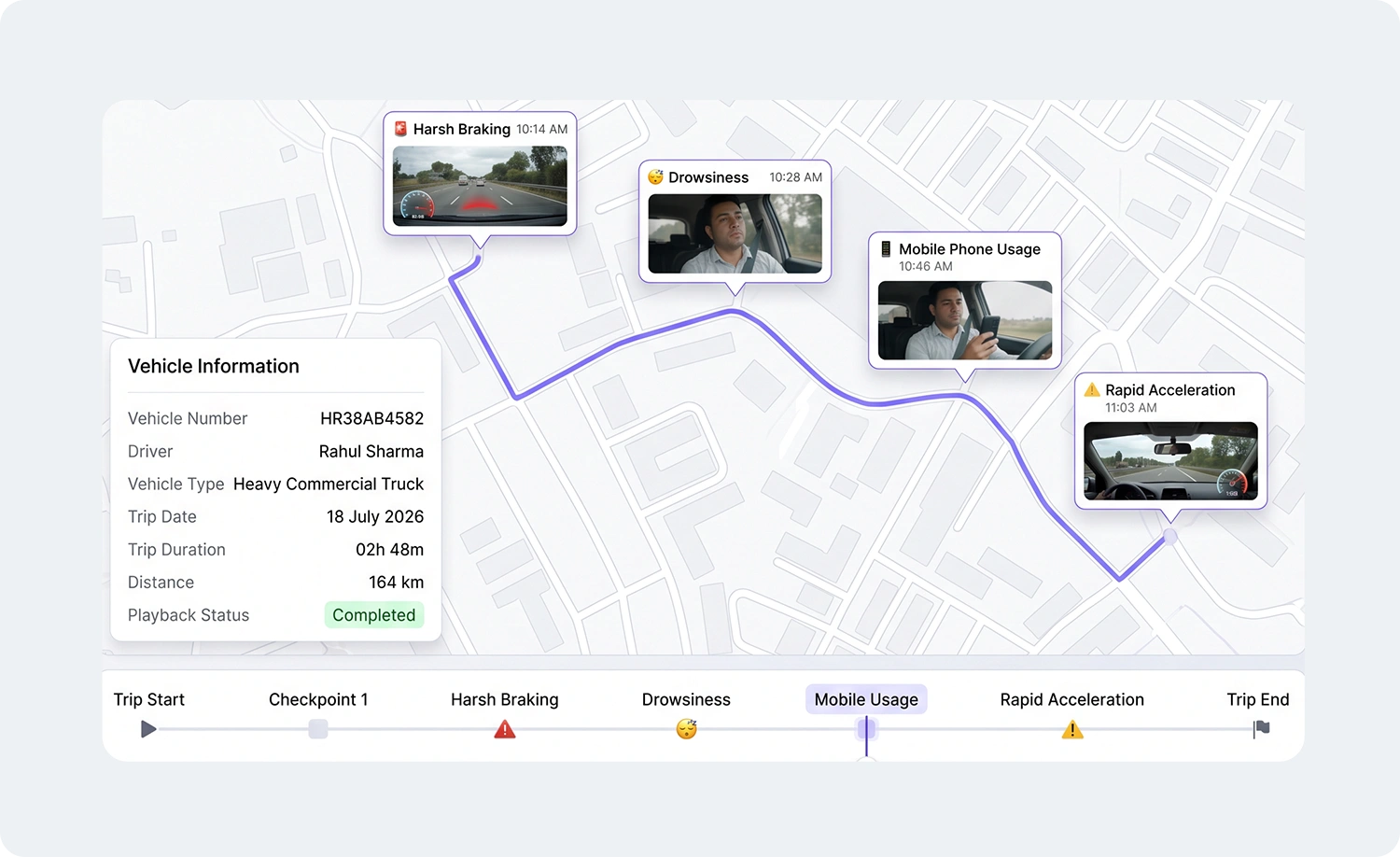
Full trip timelines with synced video and event data for liability investigations.
Fleet Dash Cam Parking Mode
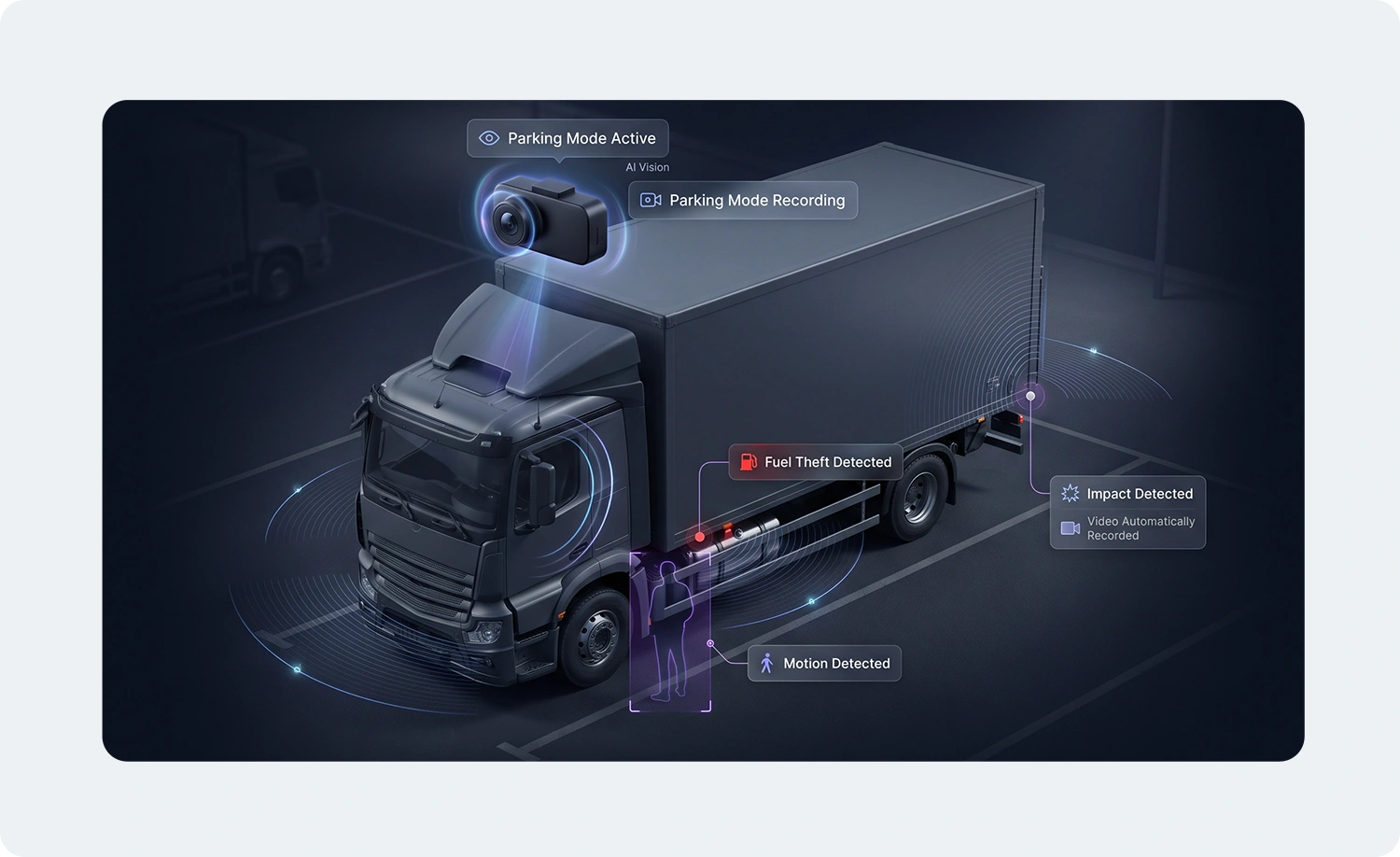
Monitors vehicle activity outside operating hours for unauthorised use or security incidents.
AI-Powered Driver Coaching
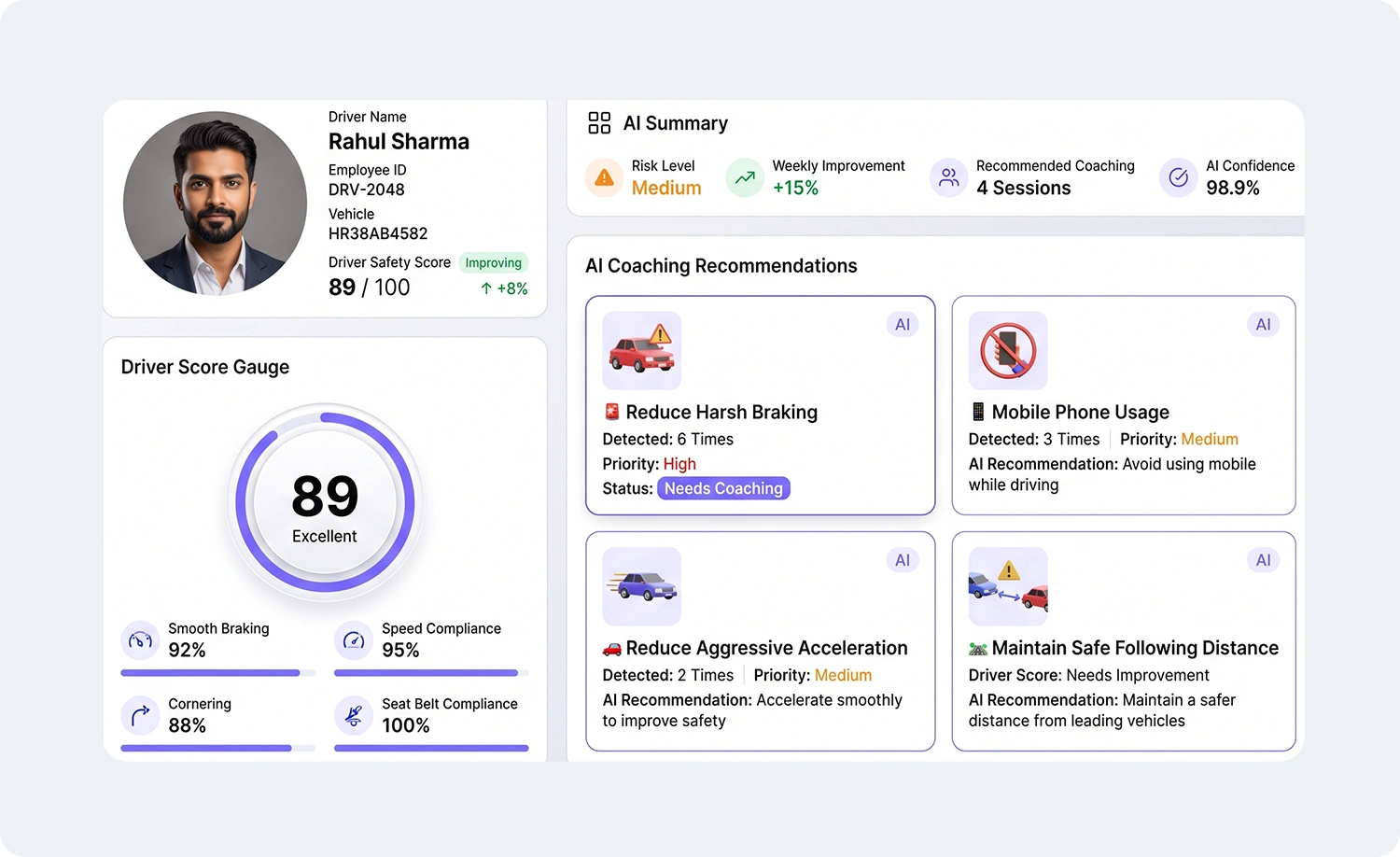
Event-linked footage and performance insights for targeted coaching.
Geofencing and Route Monitoring
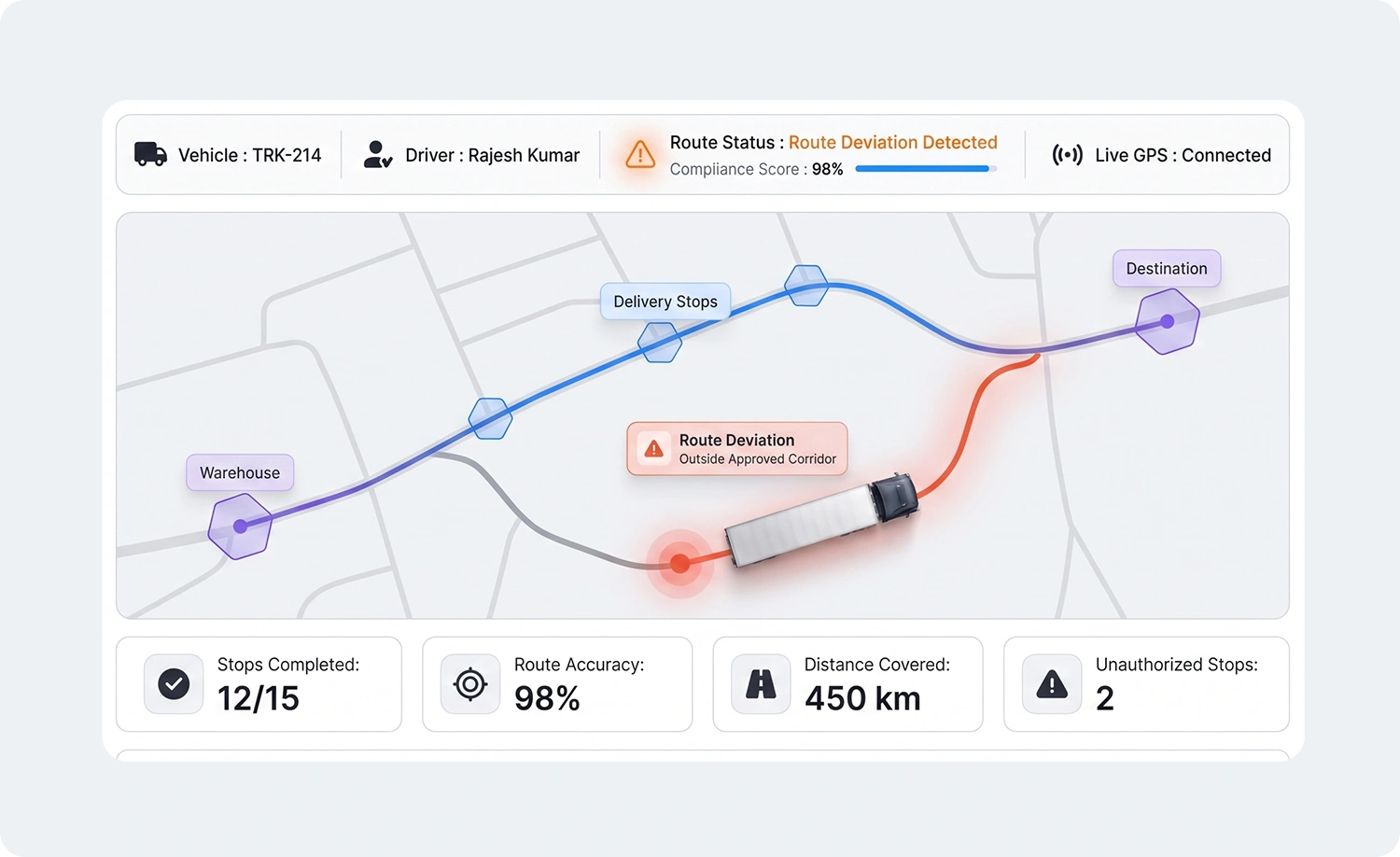
Tracks route compliance and reduces unauthorised trips.
Live Streaming
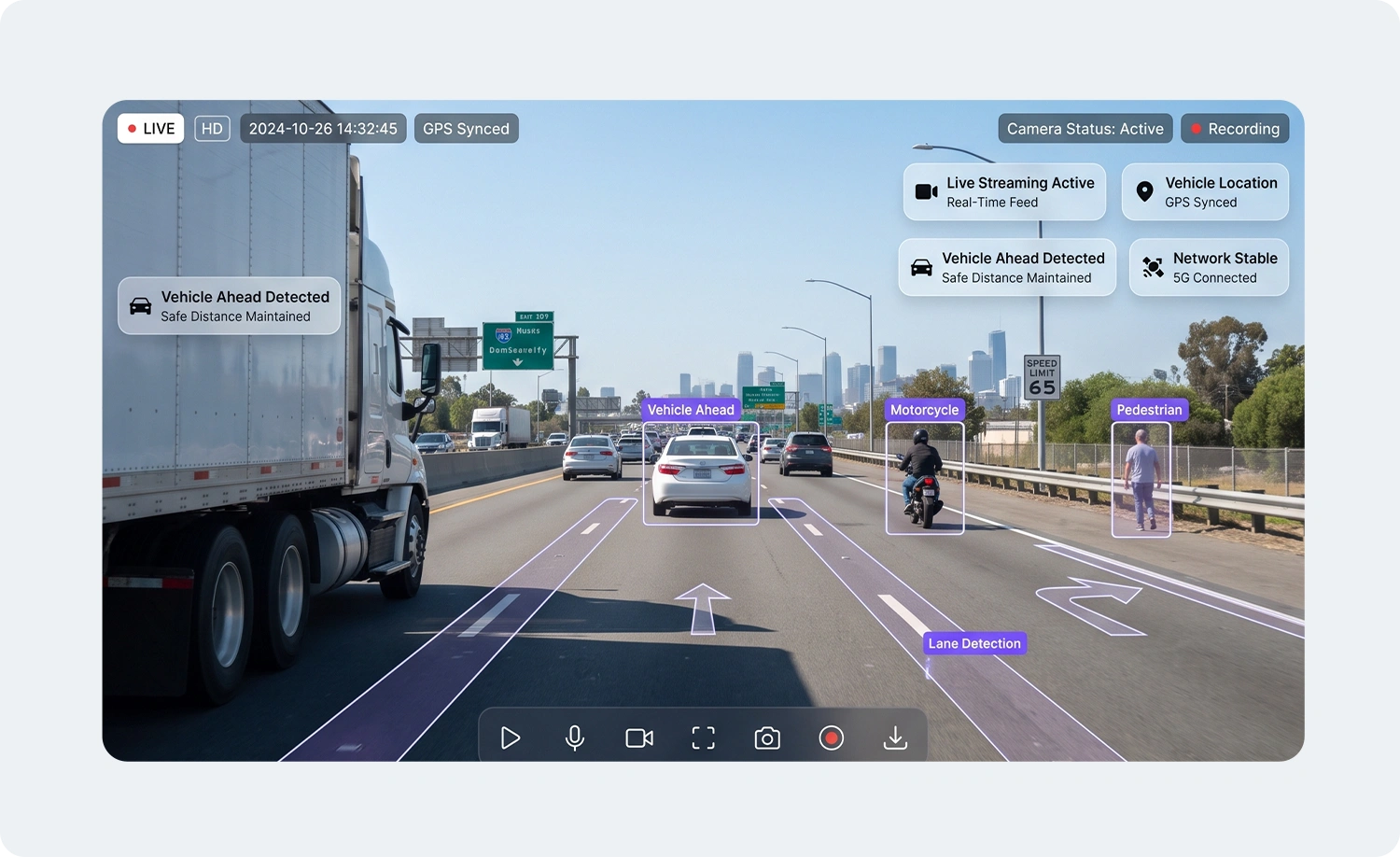
On-demand visibility into a vehicle's camera feed before, during, or after an incident.
Two-Way Communication
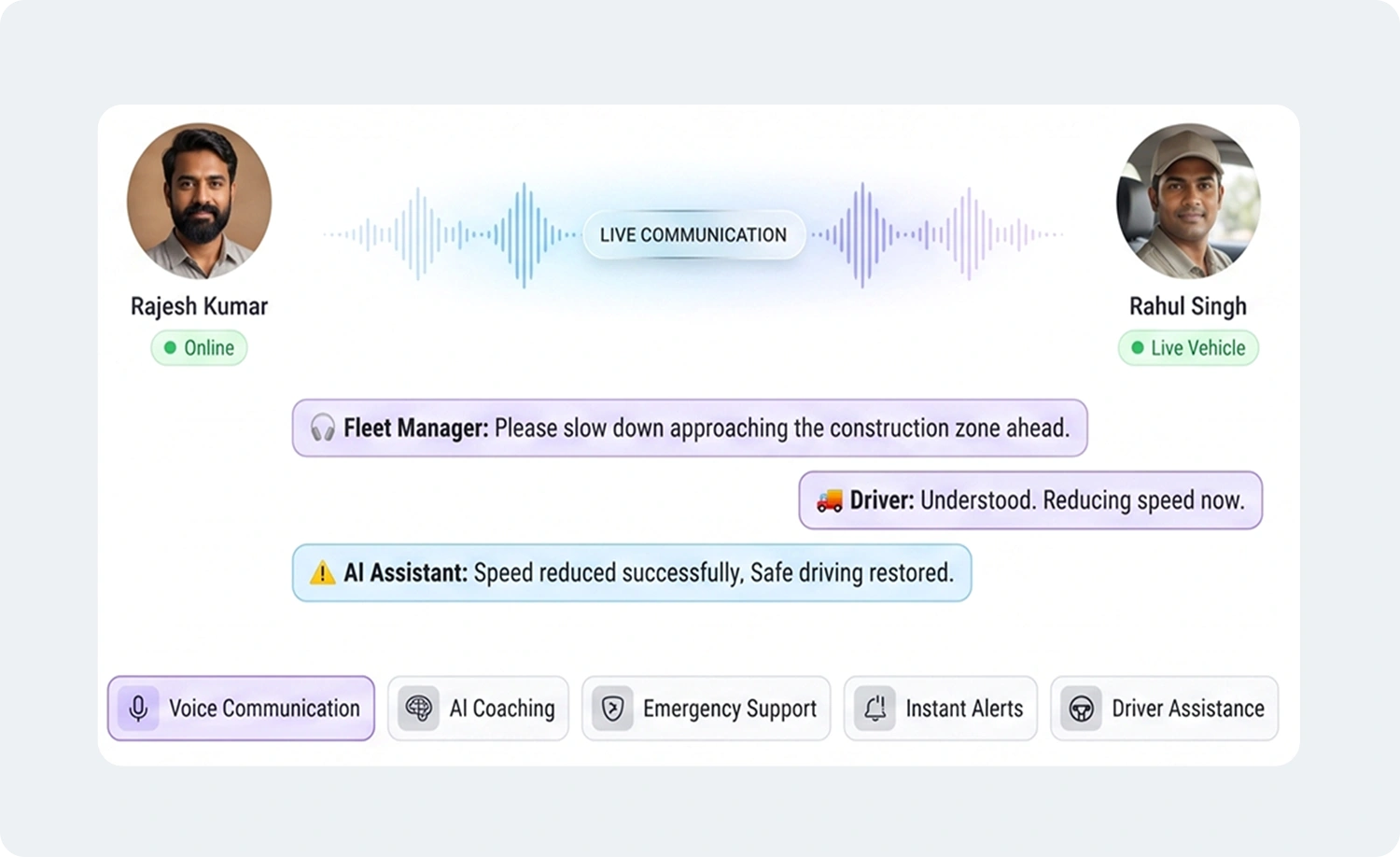
Direct line between fleet managers and drivers for real-time coaching or incident response.
Get started with TrackoBit today.
Business Benefits of Dash Cam Telematics for Fleet Operations
From accident verification to driver coaching, dash cam telematics helps fleet teams respond faster and operate with greater confidence.

Faster Investigations
Event-linked incident footage, trip history, and timelines in one platform.

Better Insurance Claim
Video-backed accident timelines improve claim accuracy and speed.

Reduced Liability Exposure
A clear, evidenced record of driving events defends against false allegations.

Lower Operational Risk
Unsafe behaviour caught before it escalates into accidents or complaints.

Improved Driver Accountability
Verified events and video evidence encourage safer driving habits.

Closed Data-Trust Gap
Self-hosted, AWS-backed infrastructure with protocol-level residency removes aggregator doubt.
AI-Powered Video Telematics for Fleet Operations
TrackoBit's AI video telematics auto-captures, tags, and connects critical driving events - showing what happened before, during, and after an incident, live where needed.
- Auto-identify distracted driving and fatigue events
- Link footage directly to driver behaviour insights
- Live stream or replay events around any incident
- Convert driving events into actionable intelligence
TrackoBit is a Recognized Leader in Fleet Dash Cam for Telematics



Frequently Asked Questions
-
What's the best dash cam for fleet telematics?
The best fleet dash cams for telematics combine AI video analytics, driving event detection, and telematics intelligence in one platform. When evaluating the best telematics dash cam systems or top-rated telematics dash cams, prioritize incident visibility, driver monitoring, and centralized fleet management capabilities.
-
What is the cost-saving benefits of using top rated telematics dashcams?
Smart dash cams help businesses reduce accident investigation time, minimize false insurance claims, and improve driver accountability. The AI dash cam telematics integration benefits also include faster incident resolution and lower operational risk. Learn more in TrackoBit’s blog on dashcam advantages and disadvantages.
-
How to choose the best dash cam for fleet telematics?
The best dash camera for telematics fleets should offer AI event detection, video telematics, centralized reporting, and driver behavior analytics. Businesses evaluating the best fleet dash camera should prioritize operational visibility, incident evidence accessibility, and scalability across growing fleet operations. They should be compatible with telematics software most importantly which provides centralized dashboard and analytics.
-
How do dash cams work?
Fleet dash cams record road activity through forward-facing or dual-facing cameras installed inside vehicles. Advanced dashcam telematics systems connect footage with driving events, trip activity, and operational alerts. Learn more in TrackoBit’s guide on how front and rear dashcams work.
-
Do dash cams record while the vehicle is parked?
Yes. Many fleet dash cam systems support parking mode recording, allowing businesses to monitor vehicle activity during non-operational hours. Fleet telematics dashcam parking mode helps capture unauthorized movement, roadside incidents, and suspicious activity even when vehicles remain stationary.
-
Is a dash cam a telematics device?
A standalone dash cam records video footage, while a telematics device tracks vehicle activity and driving events. Dash cam telematics combines both capabilities, helping fleet operators access video evidence, driving insights, and operational intelligence from a single platform.
-
What are the best practices for implementing the best telematics dash cam systems in fleets?
Successful dashcam implementation for fleet businesses starts with clear safety policies, driver communication, and telematics integration. Businesses should establish incident review workflows, driver coaching processes, and reporting standards.
-
How can AI dash cams improve driver behavior and safety?
AI dashcams works by automatically detect distracted driving, collision, lane switching, and fatigue-related events. Through fleet telematics they provide video-backed coaching opportunities and driving behavior insights. They help businesses improve driver accountability and reduce safety risks across fleet operations.
-
How do I install a dash cam?
Fleet dash cam installation typically involves mounting the camera, connecting it to vehicle power, and integrating it with the telematics platform. Professional installation ensures uninterrupted recording, accurate event detection, and reliable connectivity across commercial fleet operations.
-
How do AI dashcams help with accident liability and insurance claims?
AI dash cams capture video evidence before, during, and after an incident, helping fleet teams verify accident timelines, determine liability, and reduce false claims. Dash cam telematics improves claim validation, accelerates investigations, and supports evidence-based insurance decisions.
Get In Touch
You Are Just One Step Away